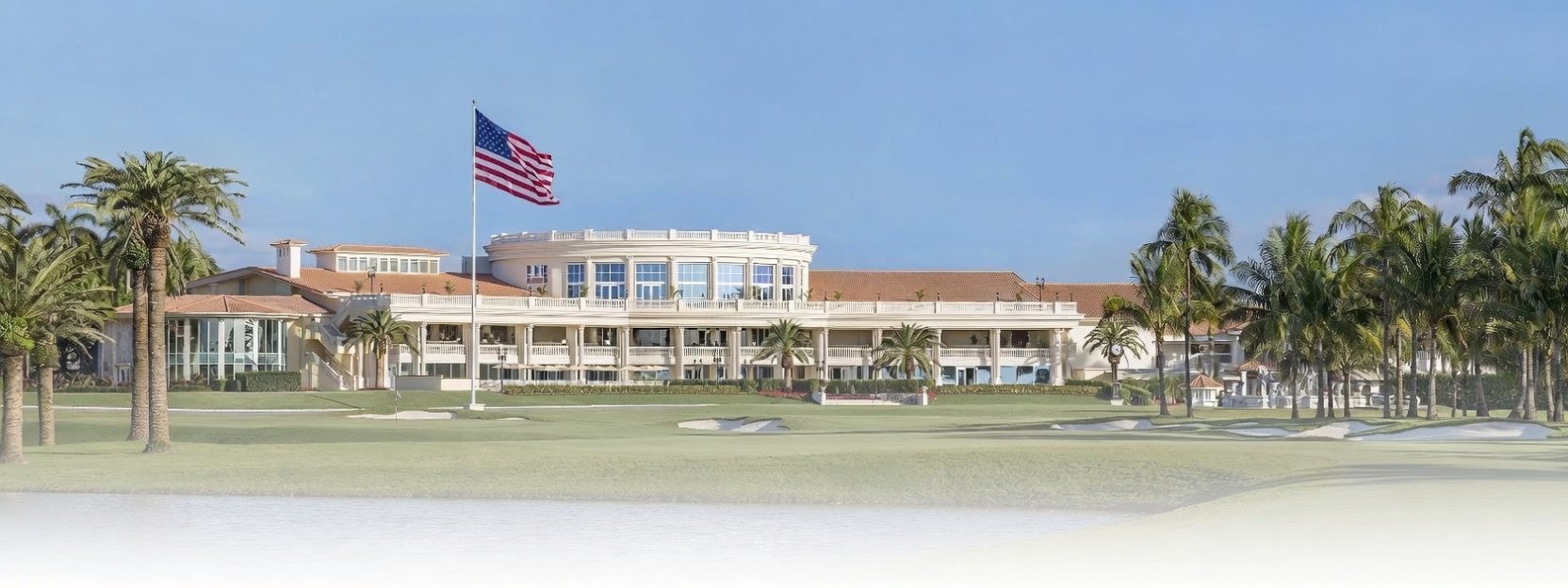
Cadillac Championship
A decade later, and the Monster still has teeth
Gil Hanse rebuilt every green, relocated every bunker, and excavated new lakes on the 15th and 16th holes. Then the PGA Tour left. For ten years, the Blue Monster sat outside the professional game's perimeter — hosting LIV Miami events where Marc Leishman won at six under last year, a score that would have embarrassed the pre-renovation course. Now the Tour returns with a $20 million Signature Event purse and 72 players, and nobody in the field has a competitive round on the current layout under PGA Tour conditions.
That blank institutional memory is the story this week. Rory McIlroy is sitting out his second consecutive Signature Event. Schauffele, Aberg, Fitzpatrick, and MacIntyre have all opted out. Alex Fitzpatrick, who was booked on a flight to Turkey for a DP World Tour event, rerouted to Miami within 72 hours of winning the Zurich with his brother — he’ll make his Signature Event debut at the Blue Monster. The Zurich isn’t my favorite week on the schedule, but watching a brother help his sibling earn a Tour card in real time is about as good as the team format gets. Matt, arguably the best player in the world right now, gets a pass this week — he has played a heavy schedule over the past month and his recent run has more than earned the rest. The others are looking ahead. Five of the world’s top fifteen will not be in Miami, but the field that remains — Scheffler, Morikawa, Burns, Young, Fleetwood, Henley — is still very strong.
The absences are starting to tell a story though. The Tour scheduled two Signature Events in the three weeks before a major — Doral this week, Quail Hollow next, then the PGA Championship at Aronimink. That is a lot to ask of players who are building their schedules around a shot at a major title. The Tour designed Signature Events to guarantee star-studded fields, and yet the best players are increasingly treating them as just another week (cough, cough Rory). It has shades of the NBA’s load management problem: the schedule is long, the stakes of any individual week diluted by the next one, and the players with the most leverage are the ones most willing to exercise it. This is a relatively new phenomenon. We did not see top-ten players routinely skipping elevated events in years past, and it would not be surprising to see the Tour address the scheduling before long.
| Day | TV Coverage (ET) |
|---|---|
| Thu 4/30 | Golf Channel 3–7 PM |
| Fri 5/1 | Golf Channel 3–7 PM |
| Sat 5/2 | Golf Channel 12–3 PM · CBS 3–6 PM |
| Sun 5/3 | Golf Channel 12–3 PM · CBS 3–6 PM |
The course rewards the long ball — and punishes everything else with water
Dick Wilson carved the original out of Dade County swampland in 1962. Six decades and several renovations later, Hanse turned it into something closer to a modern penal design: water threatening on the majority of holes, greens rebuilt with new ridges and slopes, and a par-3 15th that now requires a full carry over a lake to a peninsula green. The 18th — a 473-yard par 4 with water running the entire left side — remains one of the most photographed finishing holes in professional golf and one of the hardest when wind arrives off the Everglades.
The SG profile here favors tee-to-green quality, full stop. DataGolf’s course model ranks Doral 100th out of 105 courses in approach play separation and 94th in off-the-tee separation — meaning those two skills create more variance in scoring here than at nearly any other venue on the schedule. At this yardage, distance off the tee creates real separation — the par 5s are reachable for bombers and the long par 4s (14th at 467 yards, 18th at 473) demand length just to reach the green in regulation. But approach play into Hanse’s rebuilt green complexes is where the scoring happens. The player who wins this week will hit quality irons into water-guarded targets and keep bogeys off the card when he misses. Putting ranks just 16th in separation on TifEagle Bermuda — relevant, not decisive.
| Year | Winner | Score | Note |
|---|---|---|---|
| 2016 | Adam Scott | -12 (276) | Last PGA Tour event at Doral; won by one over Bubba Watson |
| 2015 | Dustin Johnson | -9 (279) | J.B. Holmes led by five entering Sunday, shot 75 |
| 2014 | Patrick Reed | -4 (284) | First year of Hanse renovation; 318 balls in water |
| 2013 | Tiger Woods | -19 (269) | Co-record 72-hole score; pre-renovation course |
| 2012 | Justin Rose | -16 (272) | First Englishman to win; Watson shot 74 on Sunday |
| LIV ’25 | Marc Leishman | -6 (54 holes) | Most recent competition on current setup |
Course-correlated form: Bay Hill — another long, water-heavy Florida layout demanding tee-to-green precision — is the closest analog on the current schedule. Scheffler finished T30 there at two under in March, one of his weakest results of the season.
A new way to read the field before Thursday
This week we’re introducing Par+, a number we’ve been building behind the scenes and are ready to put in front of you. The idea is simple: Par+ is the number of strokes Caddie’s model expects a player to score better than the field average this week. Each input was carefully selected to capture a distinct dimension of performance, with minimal overlap between them:
The result is a single number that tries to answer the question every golf fan asks on Tuesday: who should I be watching this week?
A few things Par+ is not: it is not a win predictor, it is not betting advice, and it does not claim to be the final word on anything. It is a starting point — a way to organize a 72-man field into a hierarchy that accounts for more than just world ranking or recent results alone. We will publish the full methodology at caddiegi.com/par-plus. Par+ is in its first season. The inputs are set; the weights will be refined as the sample grows. For now, here is what it sees at Doral.
| # | Player | Par+ | Course Fit | Overall |
|---|---|---|---|---|
| 1 | Cameron Young | +1.70 | 84.6 (#1) | 93.1 |
| 2 | Collin Morikawa | +1.69 | 74.0 (#8) | 86.5 |
| 3 | Scottie Scheffler | +1.63 | 81.0 (#2) | 99.7 |
| 4 | Adam Scott | +1.36 | 79.6 (#3) | 74.2 |
| 5 | Si Woo Kim | +1.36 | 73.9 (#9) | 93.6 |
| 6 | Jacob Bridgeman | +1.33 | 72.2 (#11) | 93.8 |
| 7 | Min Woo Lee | +1.29 | 72.5 (#10) | 81.9 |
| 8 | Jake Knapp | +1.22 | 74.1 (#7) | 83.8 |
| 9 | Hideki Matsuyama | +1.20 | 64.6 (#17) | 83.7 |
| 10 | Patrick Cantlay | +1.11 | 63.8 (#19) | 71.9 |
What stands out: The top three are in a tier of their own, separated by just seven hundredths of a stroke. Young’s #1 course fit score — driven by his combination of elite distance and approach quality — gives him the slimmest of edges. Morikawa’s iron play and durable form hold him at second. Scheffler’s overall dominance and bogey avoidance keep him right there at third, even at a venue with no competitive history for anyone in the field. Below them, a 0.3-stroke gap to the next tier tells you how clearly the model separates these three from the rest.
The most interesting movement is Adam Scott. He is 54th in the world rankings but climbs to Par+ #4, a jump of 50 spots. The model sees what the market discounts: the only returning champion in the field, with the third-highest course fit score. At the other end, Justin Rose drops 24 spots from OWGR #5 to Par+ #29, and Justin Thomas falls 38 spots from OWGR #17 to Par+ #55. The model is not impressed by reputation alone.
DataGolf thinks Scheffler is overpriced — and the rest of the field is priced about right
| Player | DG Win% | Market Odds | Edge |
|---|---|---|---|
| Scottie Scheffler | 19.2% | +300 (25.0%) | -5.8% |
| Cameron Young | 6.9% | +1400 (6.7%) | +0.2% |
| Collin Morikawa | 3.8% | +2200 (4.3%) | -0.5% |
| Min Woo Lee | 3.3% | +4100 (2.4%) | +0.9% |
| Chris Gotterup | 2.9% | +3500 (2.8%) | +0.1% |
| Si Woo Kim | 2.8% | +3100 (3.1%) | -0.3% |
| Patrick Cantlay | 2.7% | +2700 (3.6%) | -0.9% |
| Tommy Fleetwood | 2.7% | +2500 (3.8%) | -1.1% |
| Jake Knapp | 2.7% | +3700 (2.6%) | +0.1% |
| Maverick McNealy | 2.5% | +3300 (2.9%) | -0.4% |
Scheffler at +300 means the market gives him roughly a one-in-four chance of winning a tournament he has never played. The model disagrees — at 19.2%, it sees the market overpricing him by nearly six points, the largest negative edge on the board. Behind him, the market has this field priced efficiently. Min Woo Lee at +4100 is the closest thing to value; everyone else is fairly priced or slightly overpriced.
Four career wins before his 27th birthday, two of them this season — the Sony Open and a playoff victory over Matsuyama at the WM Phoenix Open. Gotterup is world No. 11, and the fact that he’s priced at 35-to-1 here tells you how much gravity Scheffler exerts on this market. At 7,739 yards, the Blue Monster is built for his game: he has the distance to reach the par 5s in two and the iron quality to attack Hanse’s rebuilt greens. The only question is whether his relative inexperience in Signature Events creates any turbulence. His form guide says no.
Golf’s feel-good story of the 2026 season. Woodland won the Houston Open three weeks ago — his first victory since the 2019 U.S. Open — just weeks after publicly revealing his battle with PTSD following brain surgery in 2023. He is second on Tour in driving distance at age 41, averaging over 323 yards off the tee. He also has something almost nobody else in this field possesses: actual competitive rounds at Doral, with three prior appearances (T23, T16, T29 from 2013–2015). The course has changed, but muscle memory at a venue is not nothing. At 78-to-1, you are getting a recent winner with course history and the second-longest driver on Tour.
McNealy has quietly assembled one of the most consistent seasons on Tour — seven top-25s in ten starts, fourth in SG Total, world No. 30. The Stanford product won his first career title at the 2024 RSM Classic on his 134th start; patience is the operating principle. His tee-to-green numbers rank among the field’s best this week, and at a course where water demands discipline over aggression, his steady accumulator profile is precisely the right shape. At +3300, the market is not fully crediting a player whose underlying numbers belong in the top tier behind Scheffler.
Bhatia makes birdies at a rate almost nobody in this field can match — third on Tour at nearly five per round. At a course that will hand out bogeys freely, that volume is how you stay in contention. The 22-year-old won earlier this season and has three top-10s in nine starts, but his missed cuts (three of nine) reveal the volatility: when the putter is on, the ceiling is as high as anyone’s outside Scheffler. When it isn’t, the floor drops fast. Par+ has him at #15, just outside the top 10, with a course fit score that suggests the Blue Monster’s demands don’t perfectly match his skill set. But at 45-to-1 in a no-cut event, the upside case is real.
The 23-year-old Japanese player has made ten consecutive cuts and posted four top-10s this season, including a T8 at the Valero Texas Open two starts ago. He is second on Tour in greens in regulation behind Rose — an iron player of considerable precision on a course that will filter for exactly that. At 80-to-1, the market is pricing his age and his lack of a PGA Tour win. His iron play and his form guide say the price is too long.
What happens when the entire field is playing a course blind?
Sixteen players in this 72-man field have competitive history at the Blue Monster, all of it from 2016 or earlier — before the course hosted four years of LIV events that the PGA Tour's data infrastructure doesn't track. Adam Scott and Justin Rose carry residue from rounds played a decade ago on a layout that has since changed significantly. Everyone else is reading yardage books for the first time. That levels the field in a way no other Signature Event has this season. At the Heritage, experience at Harbour Town was an empirically measurable advantage. At Augusta, course knowledge is the single greatest non-skill predictor of performance. Here, there is no such advantage. The week will be decided by portable skills — raw ball-striking, quality of iron play, discipline around water — rather than venue-specific pattern recognition. For a player like Hisatsune or Chris Gotterup, whose form is better than their course history could possibly be, that blank slate is a structural gift.
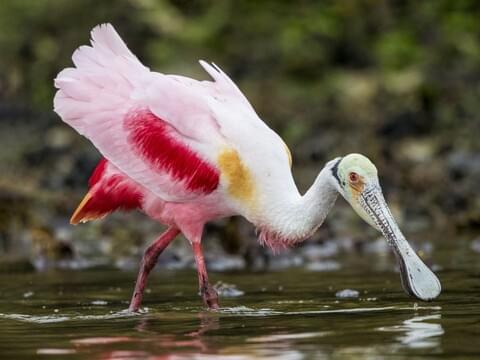
Each week, a bird native to the tournament's corner of the country.
PGA Tour — Five things to know about Trump National Doral
PGA Tour — Inside the Field: Cadillac Championship
SI — 2026 Cadillac Championship Full Field
Golf.com — 2026 Cadillac Championship odds
Golf Digest — Trump National Doral: Blue Monster course profile
Covers — Cadillac Championship odds and picks
Golf Channel — Cadillac Championship odds and favorites
Lineups.com — 2026 Cadillac Championship Preview
Betfair — Cadillac Championship betting preview
Wikipedia — Roseate Spoonbill
Tropical Audubon Society — Birds of South Florida